2. Early Shows
New Stereopticon Depicts Civil War Rebellion
The word “Stereopticon” captures the excitement of this new, more “scientific” name for a bigger and more powerful magic lantern show.
The Stereopticon Show was introduced in Philadelphia in 1860 and the name was rapidly picked up by most of the show’s competitors. The stereopticon was not “3-D” but was usually a dissolving two-lens, or “biunial” lantern. It showed photographic slides that were so sharp they had a 3-D appearance—or so it was claimed.
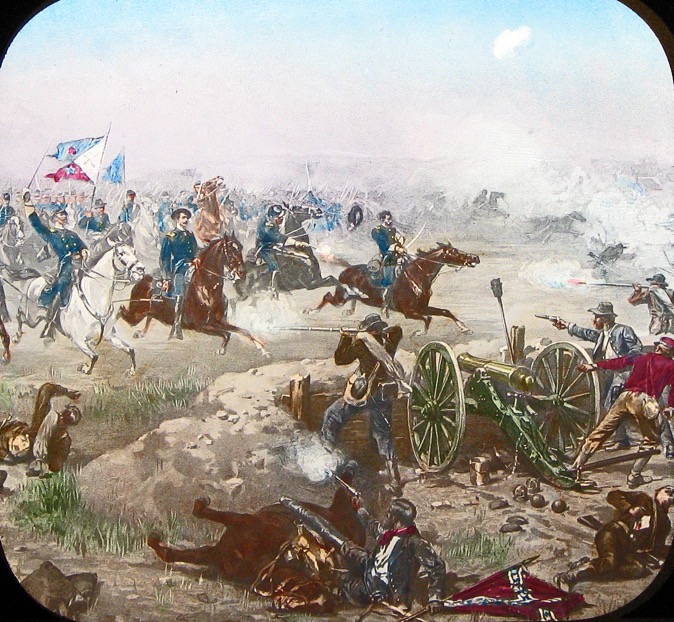
This broadside promotes a Civil War Show featuring slides that were probably made from a combination of photographs and photographed etchings or wood engravings. (Similar slide shown.) The show includes a slide of the Battle of Petersburg, June 15, 1864, just four months before this lantern performance, so this show is an early form of current-events screen production. The Civil War remained a popular subject in lantern shows for the next 40 years.
Archival Notes
 Next:
Next: 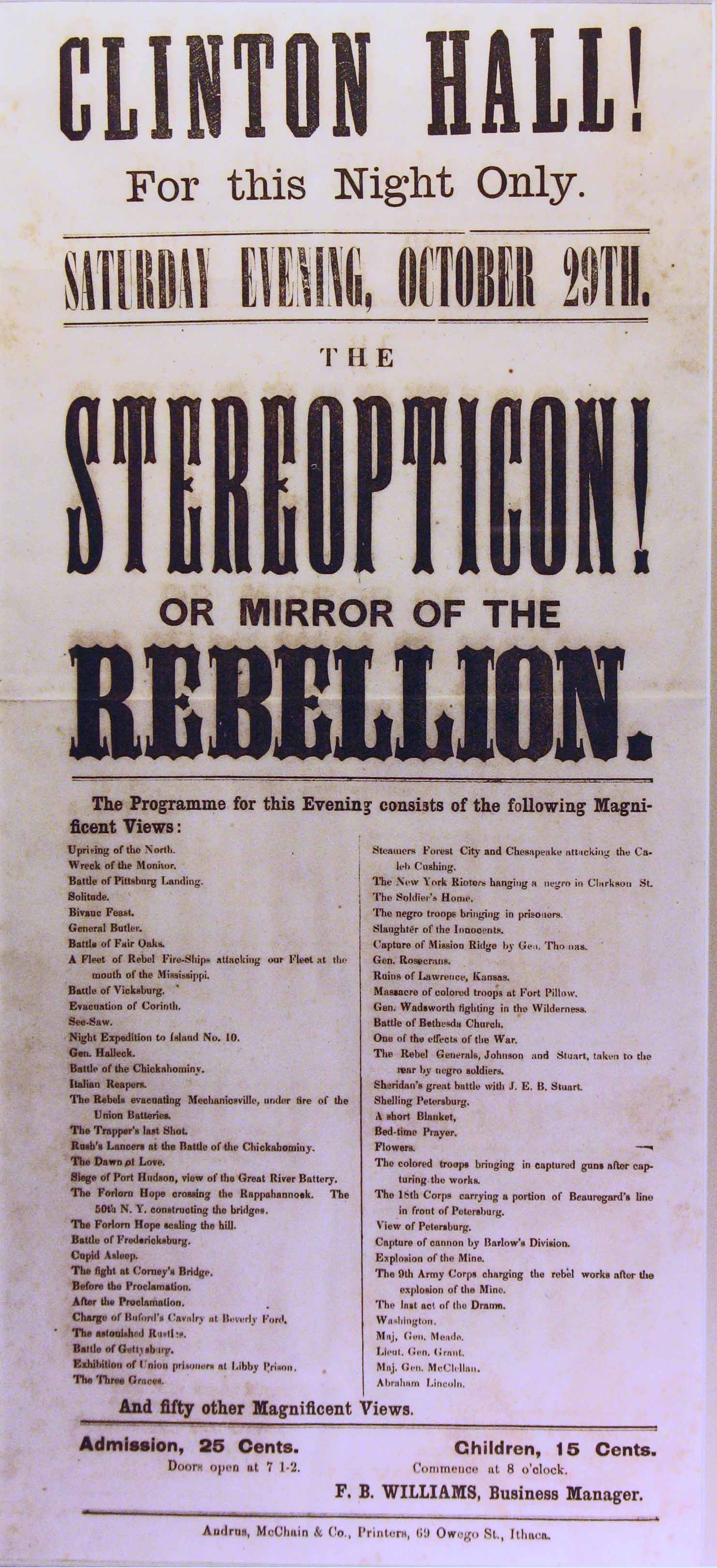
Advertising Plasters the Landscape
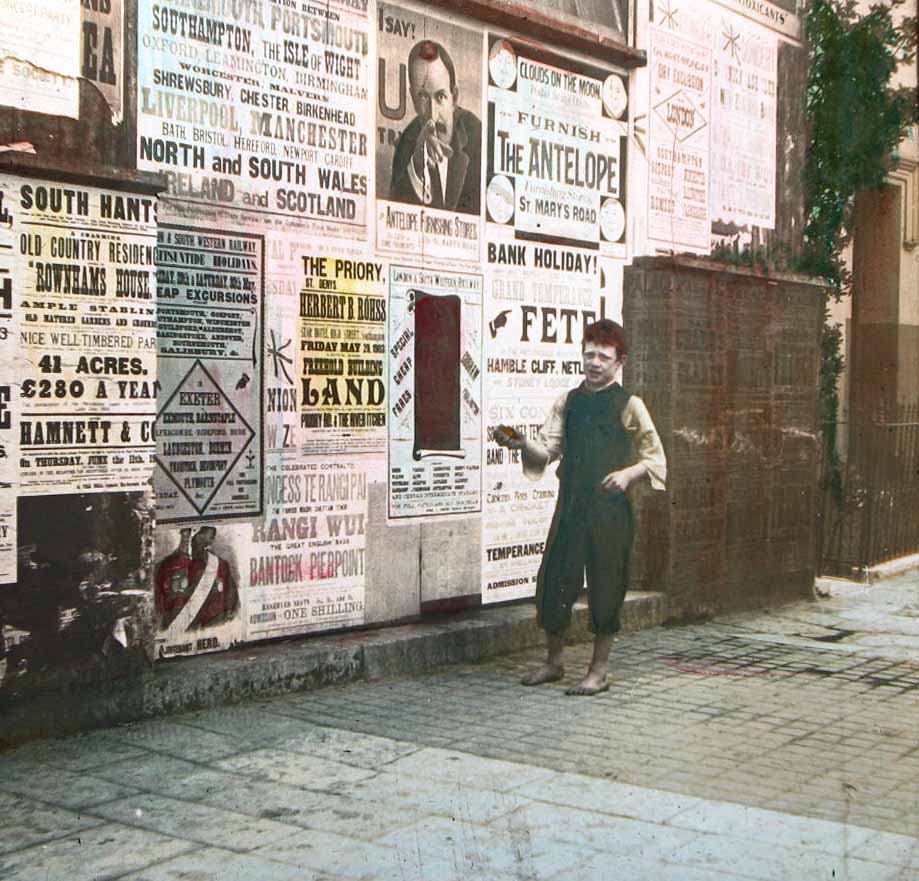
Advertising on the streets 100 years ago was as ubiquitous as advertising on TV today, so magic lantern show ads and broadsides faced stiff competition. Shown, a lantern slide of an English wall plastered with ads.
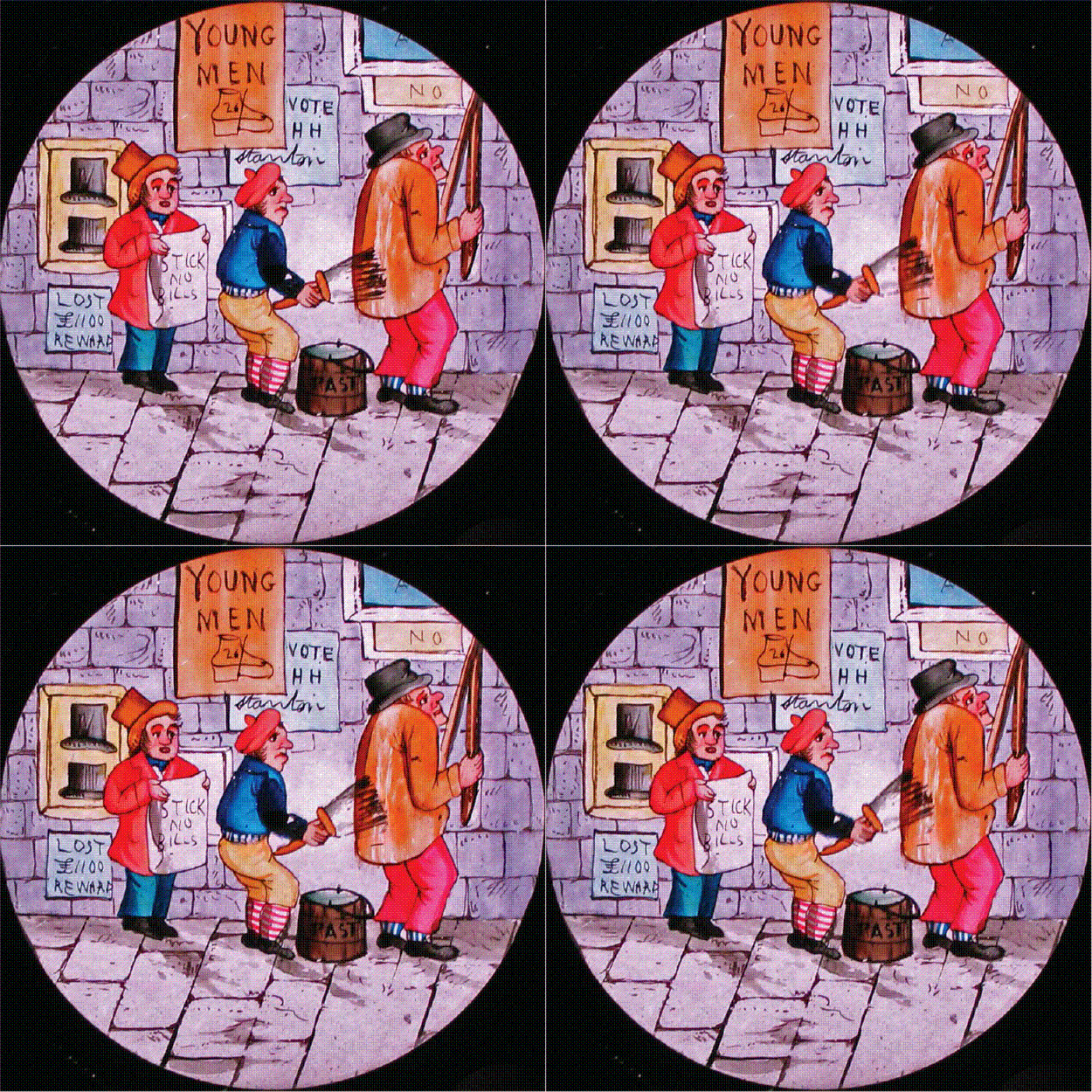
There was so much broadside advertising that it led to lantern-slide jokes on the subject, as in this slide. It shows a man posting an advertising bill, using a stick to hold up the bill while he spreads paste with a long-handled brush. Two kids are also at work. Click.
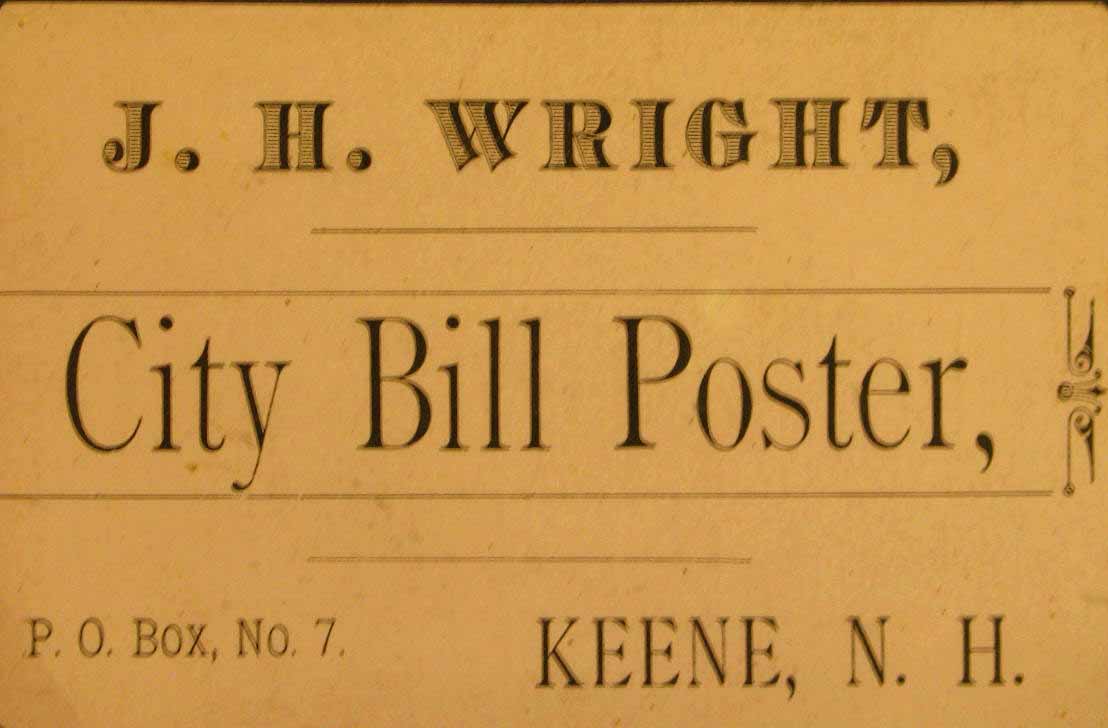
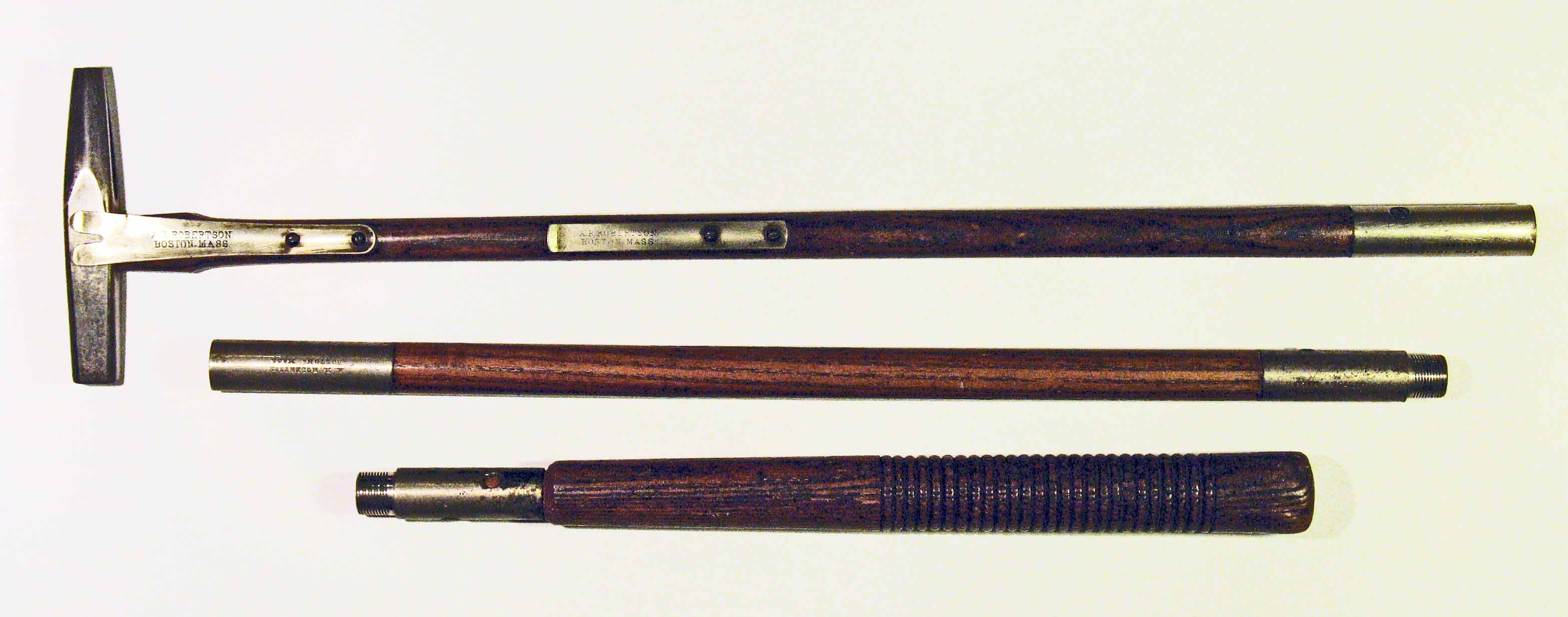
The competition for advertising space led to the development of professional City Bill Posters, and a special collapsible bill-poster’s hammer that once assembled was 3 ½ feet long. A bracket on the hammer held the poster and a thumbtack so that the advertiser could place the advertising up high, out of the reach of competitors and malicious small boys.
Archival Notes